From Game to Brand: How Successful iGaming Studios Build Recognisable Worlds?
Interview with Aurélie Bensoussan, Co-Founder of Fortuna Labz
Standing Out In A High-Volume Industry
With an industry producing an increasing number of slot titles each year, how can a studio ensure its games remain identifiable and memorable?
In iGaming, differentiation comes from storytelling and visual consistency. A game cannot rely solely on its mechanics; it must also embody a recognizable universe.
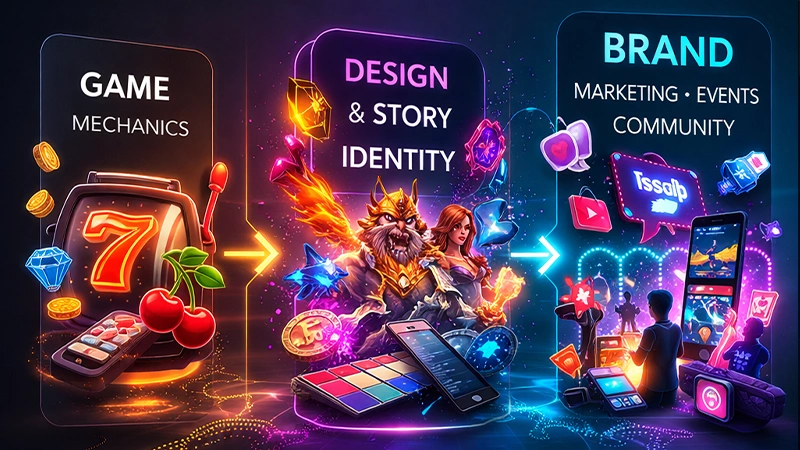
When product design, narrative identity, and marketing activation are aligned, the game becomes more than a product, it becomes a brand. In an environment where players are constantly exposed to new content, emotion and immersion drive memorability far more than technical features alone.
Expanding A Game Beyond Its Core Product
How can studios transform a game launch into a broader engagement strategy for players and partners?
A game should not exist only inside the platform. Its universe must extend across events, social media storytelling, digital activations, and immersive campaigns.
This multi-touchpoint approach creates engagement loops where players encounter the brand repeatedly across different environments. The objective is to build a narrative ecosystem that transforms gameplay into a memorable experience.
Balancing Release Rythm And Creative Impact
Many studios face pressure to release games frequently. How do you balance production cadence with creative originality?
Regular releases are part of the iGaming ecosystem, but volume should never replace creative value.
Each title must be developed as its own ecosystem, with a clear audience, distinctive design, and strong narrative identity. Data, player insights, and operator feedback guide decisions, but experimentation remains essential.
In the long term, player retention and brand recall matter more than the number of launches.
Design As A Strategic Marketing Tool
How does visual identity influence both product design and marketing performance?
Visual language is essentially the signature of a studio.
Elements such as color palettes, character design, animation style, and environments must form a coherent visual system. When this identity is strong, a player can recognize a game instantly, even from a single screenshot.
This visual coherence strengthens marketing impact because imagery conveys emotion, tone, and narrative far more rapidly than text.
The Next Step For The iGaming Industry
If you could change one aspect of the current iGaming ecosystem over the next few years, what would it be?
The industry would benefit from greater creative boldness and stronger storytelling strategies.
Many companies continue to replicate proven formulas. However, differentiation increasingly depends on immersive experiences, distinctive visual identities, and innovative marketing narratives.
The studios that succeed tomorrow will be those capable of transforming games into recognizable worlds that players want to revisit.
Need to Create Your Own Brand Recognisable Worlds?